Understanding the 2026 Estate Tax Exemption: $13.61 Million Insights
Advertisements
The financial brief 2026 Estate Tax Exemption details the projected $13.61 million per individual limit and its implications for wealth transfer in the United States.
This concise summary breaks down the upcoming legislative changes, explains why these adjustments matter for asset protection, and outlines the critical planning timelines that wealth holders and financial advisors must monitor next.
Understanding the 2026 Estate Tax Exemption: Key Figures and Projections
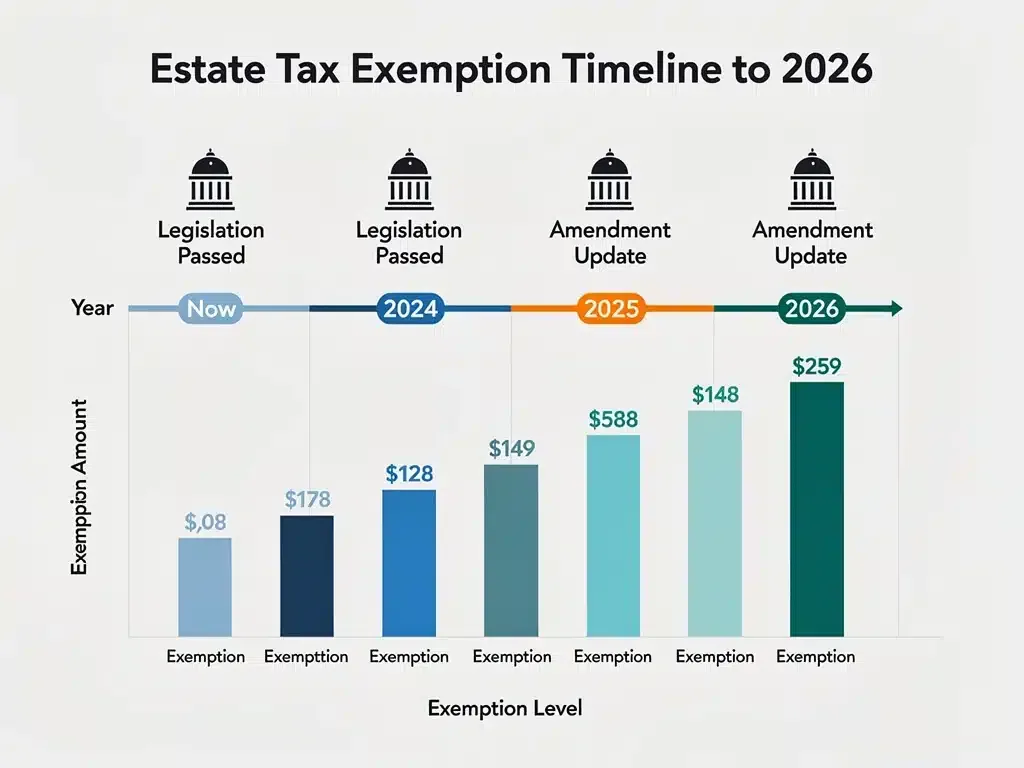
The Internal Revenue Service (IRS) has indicated that the federal estate tax exemption is expected to rise significantly by 2026, reaching an estimated $13.61 million per individual.
This projection is based on inflation adjustments and current tax law, providing a crucial benchmark for high-net-worth individuals and their estate planners.
This substantial increase means that a married couple could potentially shield up to $27.22 million from federal estate taxes, assuming both spouses fully utilize their exemption amounts.
Such figures underscore the importance of proactive planning in managing significant wealth transfers.
The current framework stems from the Tax Cuts and Jobs Act (TCJA) of 2017, which temporarily doubled the estate tax exemption.
However, these provisions are set to expire at the end of 2025, reverting to pre-TCJA levels unless Congress acts to extend them.
What the $13.61 Million Means for You
The projected $13.61 million exemption per individual allows a larger portion of an individual’s estate to pass to heirs free of federal estate tax.
This directly impacts how estates are structured and how wealth is distributed upon death.
For many, this increased exemption provides an opportunity to reassess existing trusts, wills, and gifting strategies.
It may reduce or eliminate the need for certain complex estate planning techniques that were previously essential for mitigating estate tax liabilities.
However, it is vital to remember that state-level estate and inheritance taxes vary widely and are not affected by this federal exemption. Residents in states with their own estate taxes must consider both federal and state regulations in their planning.
Historical Context and Legislative Outlook for the 2026 Estate Tax Exemption
The journey to the 2026 Estate Tax Exemption has been marked by legislative changes and economic shifts over several decades. Understanding this history provides critical context for current projections and future possibilities.
The estate tax, often referred to as the “death tax” by some, has undergone numerous revisions, reflecting evolving political and economic philosophies. These changes have consistently influenced how wealth is transferred between generations.
The TCJA’s temporary doubling of the exemption was a landmark decision, but its scheduled sunset provision in 2025 creates uncertainty.
This legislative cliff means that without new action from Congress, the exemption amount will effectively be cut in half, reverting to approximately $7 million per individual, adjusted for inflation.
The Sunset Provision and Its Implications
The expiration of the TCJA provisions at the end of 2025 introduces a significant planning challenge. The 2026 Estate Tax Exemption, while currently projected at $13.61 million, could be drastically different if the law reverts.
This potential reversion means that estate plans designed around the higher exemption amounts might become inadequate overnight.
Individuals with estates currently below the 2026 projected exemption could find themselves subject to federal estate tax if the exemption halves.
Financial advisors are therefore recommending a dual-track planning approach: one scenario based on the higher exemption and another based on the potential reversion. This prepares clients for either legislative outcome.
Strategies for Maximizing the 2026 Estate Tax Exemption
With the projected 2026 Estate Tax Exemption offering substantial relief, strategic financial planning becomes paramount. Proactive measures can ensure individuals fully leverage these favorable conditions.
One key strategy involves lifetime gifting. Utilizing the annual gift tax exclusion and the lifetime gift tax exemption allows individuals to transfer wealth out of their estate during their lifetime, reducing the taxable estate at death.
Another approach involves reviewing and updating existing estate planning documents, such as wills, trusts, and powers of attorney, to align with the higher exemption amounts.
This ensures that current intentions are accurately reflected and legally enforceable.
Gifting Strategies to Consider
Annual exclusion gifts, which are currently $18,000 per donee in 2024, allow individuals to gift money or assets without incurring gift tax or using their lifetime exemption.
This is a powerful tool for gradual wealth transfer.
Split gifts, where married couples combine their annual exclusions, can double the amount gifted tax-free to each recipient. This effectively accelerates wealth transfer to the next generation without triggering tax implications.
Moreover, individuals can make larger gifts that utilize a portion of their lifetime gift tax exemption.
While these larger gifts reduce the estate tax exemption available at death, they can be highly effective in reducing the overall taxable estate, especially if asset values are expected to appreciate significantly.
Impact on High-Net-Worth Individuals and Families
The elevated 2026 Estate Tax Exemption provides significant advantages for high-net-worth individuals and families. It offers a window of opportunity to optimize wealth transfer and minimize future tax liabilities.
For these families, the increased exemption means more wealth can be passed directly to beneficiaries without the federal government taking a share. This can preserve family legacies and support philanthropic endeavors more effectively.
However, complex estates often involve various types of assets, including businesses, real estate, and investments, requiring sophisticated planning to effectively utilize the exemption. This is where expert advice becomes invaluable.
Advanced Estate Planning Techniques
Irrevocable trusts, such as Grantor Retained Annuity Trusts (GRATs) or Charitable Lead Trusts (CLTs), remain valuable tools.
They can help transfer appreciating assets out of an estate while potentially reducing gift and estate taxes, even with the higher 2026 Estate Tax Exemption.
Family limited partnerships (FLPs) or limited liability companies (LLCs) can also be used to consolidate assets and facilitate their transfer to younger generations.
These structures often come with valuation discounts, further reducing the taxable value of the transferred assets.
Life insurance trusts, specifically Irrevocable Life Insurance Trusts (ILITs), can be used to hold life insurance policies outside the taxable estate.
The death benefit can then provide liquidity to pay estate taxes or provide an inheritance free of estate tax, complementing the 2026 Estate Tax Exemption.
The Role of Professional Guidance in Navigating the 2026 Estate Tax Exemption
Navigating the complexities of the 2026 Estate Tax Exemption requires expert knowledge and tailored advice. Relying on qualified professionals is crucial for effective planning and compliance.
Estate planning attorneys, financial advisors, and tax professionals play indispensable roles in helping individuals understand their options and implement appropriate strategies.
Their expertise ensures that all legal and financial aspects are meticulously addressed.
These professionals can provide personalized guidance, taking into account an individual’s unique financial situation, family dynamics, and philanthropic goals. They help translate complex tax laws into actionable plans.
Choosing the Right Advisors
When selecting an estate planning team, look for professionals with extensive experience in estate tax law and wealth transfer strategies. Certifications and a strong track record are indicators of competence.
Ensure your advisors work collaboratively. An integrated approach, where legal, financial, and tax professionals communicate effectively, leads to more comprehensive and robust estate plans.
Regular reviews with your advisory team are essential, especially given the dynamic nature of tax laws and personal circumstances. This ensures your plan remains current and optimized for the 2026 Estate Tax Exemption and beyond.
Potential Future Changes and What to Monitor
While the 2026 Estate Tax Exemption is currently projected, the legislative landscape is always subject to change. Remaining informed about potential future modifications is a critical aspect of long-term estate planning.
The political climate and economic conditions can influence congressional decisions regarding tax laws. Any new legislation before the end of 2025 could either extend the higher exemption amounts or introduce new rules.
Monitoring news from the IRS, congressional discussions, and analyses from reputable financial institutions will provide valuable insights into any developing changes. Staying ahead of these shifts allows for timely adjustments to estate plans.
Key Indicators to Watch
Keep an eye on legislative proposals related to tax reform, particularly those addressing wealth transfer and estate taxes. These discussions often signal potential shifts in policy that could impact the 2026 Estate Tax Exemption.
Economic reports and inflation data are also relevant, as the estate tax exemption is indexed for inflation. Significant economic shifts could influence the final exemption amount, even if the underlying law remains unchanged.
Furthermore, pay attention to statements from key political figures and Treasury Department officials. Their comments can offer clues about the administration’s priorities and potential legislative actions concerning the estate tax.
The Importance of Timely Estate Plan Reviews
Given the significant projected increase in the 2026 Estate Tax Exemption, coupled with the potential for legislative changes, timely and regular reviews of estate plans are more crucial than ever. A stagnant plan can quickly become outdated.
Life events, such as marriages, divorces, births, deaths, or significant changes in financial status, necessitate a review of existing estate documents. These personal circumstances can alter the effectiveness of a plan designed years ago.
Moreover, changes in tax law, like those affecting the 2026 Estate Tax Exemption, demand immediate attention. What was once an optimal strategy might no longer be the most tax-efficient or aligned with current goals.
Elements to Review in Your Estate Plan
Start by reviewing your will and any existing trusts to ensure they accurately reflect your current wishes regarding asset distribution and beneficiary designations. Confirm that these documents are legally sound and up-to-date.
Examine your gifting strategy, especially if you have significant assets. Consider whether current annual exclusion gifts or lifetime exemption gifts align with your overall wealth transfer goals and the higher 2026 Estate Tax Exemption.
Finally, assess your powers of attorney for healthcare and finances, ensuring that the designated individuals are still appropriate and capable of acting on your behalf should the need arise. These documents are vital for incapacity planning.
Beyond the Federal Exemption: State Estate and Inheritance Taxes
While the focus often remains on the federal 2026 Estate Tax Exemption, it is imperative not to overlook state-level estate and inheritance taxes. These can significantly impact an estate’s overall tax liability, even for estates that fall below the federal threshold.
Currently, several states levy their own estate taxes, which are distinct from the federal tax. The exemption amounts and tax rates vary considerably from state to state, making residency a crucial factor in estate planning.
Additionally, some states impose an inheritance tax, which is paid by the heir rather than the estate. This further complicates wealth transfer and requires careful consideration to avoid unexpected tax burdens on beneficiaries.
Navigating State-Specific Regulations
If you reside in a state with an estate tax, such as New York or Oregon, understanding its specific exemption limits and tax rates is essential.
These state-level thresholds are often lower than the federal exemption, potentially subjecting more estates to taxation.
For those living in states with an inheritance tax, like Pennsylvania or New Jersey, it is important to identify which beneficiaries will be subject to the tax and at what rates.
Spouses and direct descendants are often exempt or taxed at lower rates, while other heirs may face higher taxes.
Multi-state residents or those with property in different states should seek advice from professionals knowledgeable in the laws of all relevant jurisdictions.
This ensures a comprehensive estate plan that addresses all potential state tax implications alongside the federal 2026 Estate Tax Exemption.

| Key Aspect | Brief Description |
|---|---|
| Exemption Amount | Projected up to $13.61 million per individual for 2026. |
| TCJA Sunset | Current law expires end of 2025, potentially halving exemption. |
| Planning Importance | Essential to review wills, trusts, and gifting strategies now. |
| State Taxes | Federal exemption does not impact state-level estate/inheritance taxes. |
Frequently Asked Questions About the 2026 Estate Tax Exemption
What is the projected 2026 Estate Tax Exemption amount?▼The projected federal estate tax exemption for 2026 is up to $13.61 million per individual. This figure is subject to inflation adjustments and is based on current tax law, providing a significant benchmark for estate planning in the United States.
Why is the 2026 Estate Tax Exemption amount significant?▼This amount is significant because it determines how much of an individual’s estate can pass to heirs free of federal estate tax. For high-net-worth individuals, it offers a crucial opportunity to transfer substantial wealth without incurring federal estate tax liabilities.
What happens if Congress does not act before the end of 2025?▼If Congress does not act, the provisions of the Tax Cuts and Jobs Act (TCJA) of 2017 will expire. This means the estate tax exemption amount will revert to approximately $7 million per individual, adjusted for inflation, effectively halving the current exemption.
Does the federal 2026 Estate Tax Exemption affect state estate taxes?▼No, the federal 2026 Estate Tax Exemption does not directly affect state-level estate or inheritance taxes. Many states have their own distinct estate tax laws with different exemption amounts and rates, requiring separate consideration in estate planning.
What steps should individuals take regarding the 2026 Estate Tax Exemption?▼Individuals should review their current estate plans with qualified professionals. This includes assessing wills, trusts, and gifting strategies to ensure they are optimized for the projected exemption and to prepare for potential legislative changes or the TCJA sunset provision.
What This Means for Your Financial Future
The projected 2026 Estate Tax Exemption at $13.61 million per individual presents a critical juncture for wealth planning in the United States.
This significant figure, coupled with the impending sunset of current tax laws, underscores the urgency for individuals and families to engage in comprehensive estate reviews and strategic adjustments.
Understanding the nuances of this exemption is not merely about avoiding taxes; it is about securing legacies, ensuring the smooth transfer of assets, and supporting future generations or charitable causes as intended.
The interplay between federal and state tax laws further complicates this landscape, demanding a holistic approach to planning.
Looking ahead, the legislative environment will be a key determinant of the final landscape for estate taxes.
Staying informed through reliable sources and collaborating with experienced financial and legal advisors will be paramount to navigating these changes effectively and maximizing the benefits of the 2026 Estate Tax Exemption.
To better understand how the gift and estate tax exemption limits function, how they apply to married couples, and what strategies you can use to protect your assets before the legislative sunset, you can read the detailed guide on what the estate tax exemption is by Fidelity.