FTC’s New Guidelines: Boosting Consumer Protection Against Predatory Lending
Advertisements
The strategic brief Consumer Protection Alert: Federal Trade Commission Issues New Guidelines on Online Scams, Reporting an 18% Increase in 2025 details the regulatory response to escalating digital fraud in the United States.
This concise summary outlines the FTC’s updated cyberdefense frameworks, explains why a projected 18% spike in cybercrime demands immediate changes to consumer safety habits, and highlights the enforcement metrics to watch next.
FTC Unveils New Online Scam Guidelines Amid Rising Threats
The Federal Trade Commission recently announced its updated framework for combating online scams, a move necessitated by the rapid evolution of fraudulent digital activities.
These new guidelines represent a significant shift in strategy, focusing on preventive measures and enhanced reporting mechanisms to safeguard consumers from increasingly sophisticated attacks.
Officials from the FTC emphasized that the previous guidelines, while effective for their time, no longer adequately address the current landscape of cybercrime.
The digital environment has become a fertile ground for scammers, employing advanced social engineering tactics and leveraging emerging technologies to ensnare unsuspecting victims.
This proactive overhaul is a direct response to the projected 18% increase in online scam reports by 2025, a statistic that highlights the growing urgency of the situation.
The FTC’s goal is to empower consumers with the knowledge and resources needed to recognize and circumvent these threats before they cause irreparable harm.
Key Shifts in FTC’s Approach to Online Fraud
The updated guidelines introduce several pivotal changes aimed at strengthening consumer defenses.
A primary focus is on improving public education about the latest scam methodologies, moving beyond generic warnings to provide specific, actionable advice on identifying various forms of online deception.
Furthermore, the FTC is enhancing its collaboration with technology companies and financial institutions to facilitate quicker detection and disruption of scam operations.
This inter-agency cooperation is crucial for creating a more robust defense ecosystem against widespread fraudulent schemes.
- Enhanced Public Awareness Campaigns: New initiatives will target vulnerable demographics with tailored educational content.
- Streamlined Reporting Mechanisms: A simplified process for reporting scams to the FTC, encouraging more victims to come forward.
- Increased Industry Collaboration: Partnerships with tech giants and financial sectors to share threat intelligence and implement protective measures.
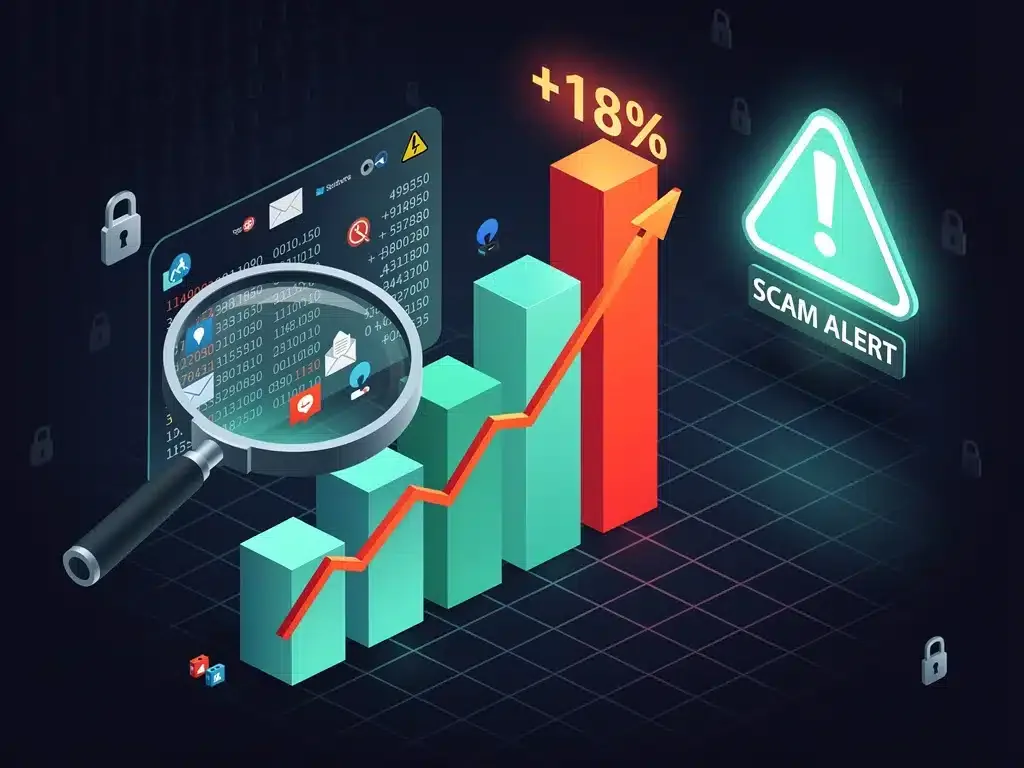
The Alarming 18% Increase in Online Scams by 2025
The FTC’s projection of an 18% increase in online scam reports by 2025 serves as a stark warning about the escalating digital threat landscape.
This forecast is based on analyzing current trends, emerging technologies exploited by scammers, and shifts in consumer behavior that create new vulnerabilities.
This anticipated surge is not merely a number; it represents millions of potential victims facing financial losses, identity theft, and significant emotional distress.
The types of scams are also diversifying, making it harder for the average consumer to distinguish legitimate communications from fraudulent ones.
The implications of such an increase are far-reaching, impacting not only individual consumers but also the broader economy and public trust in digital platforms.
Understanding the drivers behind this rise is crucial for developing effective countermeasures and protecting communities.
Drivers Behind the Escalation of Digital Fraud
Several factors contribute to the projected increase in online scams. The widespread adoption of artificial intelligence by scammers allows for more convincing phishing attempts and automated fraudulent communications.
Additionally, the proliferation of online shopping and remote work has expanded the attack surface for cybercriminals.
The global nature of the internet also complicates law enforcement efforts, as scammers often operate from jurisdictions with lax regulations.
This makes tracing and prosecuting perpetrators significantly more challenging, enabling them to continue their illicit activities with relative impunity.
- AI-Powered Scams: Generative AI creates highly personalized and believable phishing emails, deepfake videos, and voice impersonations.
- Expanded Digital Footprint: More online activity means more opportunities for scammers to intercept data and trick users.
- Cross-Border Operations: International scam networks exploit jurisdictional complexities, making enforcement difficult for local authorities.
Common Online Scams Targeted by New Guidelines
The FTC’s new guidelines directly address the most prevalent and damaging online scams currently affecting consumers.
These include sophisticated phishing schemes, tech support scams, imposter scams, and various forms of online shopping fraud. Each category is evolving, requiring a targeted approach for effective prevention.
Phishing remains a cornerstone of online fraud, with scammers constantly refining their techniques to bypass email filters and trick users into revealing sensitive information.
The new guidelines emphasize recognizing subtle cues in suspicious communications and verifying sender authenticity.
Imposter scams, where fraudsters impersonate government officials, charities, or even family members, are also a major focus.
These scams often play on fear or urgency, pressuring victims into making hasty decisions and transferring funds or sharing personal data.
Recognizing and Avoiding Phishing and Imposter Scams
To combat phishing, consumers are advised to scrutinize email addresses, look for grammatical errors, and be wary of unsolicited attachments or links.
The FTC encourages using multi-factor authentication for all online accounts as an additional layer of security against compromised credentials.
For imposter scams, the primary defense is skepticism. Government agencies will never demand immediate payment via gift cards or wire transfers, nor will they threaten arrest for non-compliance.
Always verify requests by contacting the organization directly through official channels, not through numbers or links provided by the potential scammer.
- Verify Sender Identity: Always double-check email addresses and domain names.
- Beware of Urgency and Threats: Scammers often create a sense of panic to bypass rational thought.
- Use Official Contact Information: Independently look up contact details for organizations or individuals claiming to need information or money.
Protecting Your Digital Footprint: Proactive Measures
Beyond understanding the types of scams, consumers must adopt proactive measures to protect their digital footprint.
This involves regular security hygiene, careful management of personal information online, and staying informed about the latest threats. The FTC’s guidelines stress that individual responsibility plays a critical role in overall online safety.
Maintaining strong, unique passwords for all accounts and utilizing password managers can significantly reduce the risk of account compromise.
Regularly reviewing privacy settings on social media and other online platforms also helps limit the exposure of personal data that scammers can exploit.
Furthermore, being cautious about what information is shared on public forums and through untrusted websites is paramount.
Scammers often piece together information from various sources to create a convincing profile of their target, making discreet online behavior a powerful defense.
Essential Digital Security Practices for Consumers
The FTC recommends a multi-faceted approach to digital security. This includes enabling two-factor authentication (2FA) wherever possible, which adds an extra layer of verification beyond just a password.
Regularly updating software and operating systems is also crucial, as these updates often contain patches for security vulnerabilities.
Consumers should also be wary of public Wi-Fi networks for sensitive transactions, as these can be less secure.
Using a Virtual Private Network (VPN) can encrypt internet traffic, providing better protection when browsing on unsecured networks.
- Strong, Unique Passwords & Password Managers: Essential for preventing credential stuffing attacks.
- Enable Two-Factor Authentication (2FA): Adds a critical security layer to online accounts.
- Regular Software Updates: Patches security flaws that scammers could exploit.
Reporting Online Scams: The Role of the FTC and Consumers
A cornerstone of the FTC’s new guidelines is the emphasis on robust and timely reporting of online scams.
Every report, no matter how small the incident, contributes to a larger intelligence picture that helps the FTC and law enforcement agencies track trends, identify perpetrators, and develop more effective prevention strategies.
Many victims hesitate to report scams due to embarrassment or the belief that nothing can be done.
However, the FTC clarifies that reporting is a vital step in protecting others and aiding in the prosecution of cybercriminals. The new guidelines aim to make the reporting process more accessible and less daunting.
The information gathered from consumer reports is instrumental in issuing new alerts, updating public education materials, and coordinating national and international enforcement actions.
Without this crucial data, the fight against online fraud becomes significantly harder.
How to Effectively Report a Scam to the FTC
Consumers who encounter or fall victim to an online scam should report it immediately to the FTC at ReportFraud.ftc.gov.
This centralized platform allows individuals to provide detailed information about the incident, including screenshots, email headers, and communication logs, which are invaluable for investigations.
In addition to reporting to the FTC, it is advisable to contact your bank or credit card company if financial information was compromised, and to notify the relevant online platform if the scam originated there.
Prompt action can often limit financial losses and prevent further misuse of personal data.
- Use ReportFraud.ftc.gov: The primary portal for reporting all types of fraud.
- Gather All Evidence: Screenshots, emails, and transaction details are critical for investigation.
- Contact Financial Institutions: Immediately inform banks or credit card companies about compromised accounts.

Future Outlook: Adapting to Evolving Cyber Threats
The landscape of online scams is constantly evolving, driven by technological advancements and the ingenuity of fraudsters.
The FTC’s new guidelines are not a static solution but rather a dynamic framework designed to adapt to future threats. Continuous vigilance and education will be key to staying ahead of cybercriminals.
As AI tools become more sophisticated, so too will the methods employed by scammers, leading to ever more convincing and personalized attacks.
Consumers must cultivate a critical mindset when interacting online, questioning unsolicited communications and verifying information independently.
Furthermore, ongoing policy discussions and technological innovations will play a crucial role in shaping the future of consumer protection.
The collective effort of government agencies, tech companies, and informed citizens is essential to build a more secure digital environment.
Staying Ahead of the Curve in Online Security
To remain protected, individuals should commit to continuous learning about new scam tactics and security best practices.
Subscribing to alerts from organizations like the FTC and cybersecurity news outlets can provide timely information on emerging threats. Participation in community forums focused on digital safety can also offer valuable insights and peer support.
The development of new security technologies, such as advanced biometric authentication and blockchain-based identity verification, holds promise for future defenses.
However, human vigilance and adherence to basic security principles will always remain the first line of defense against online fraud.
- Continuous Education: Stay informed about new scam trends and security updates.
- Critical Thinking Online: Always question and verify before acting on unsolicited requests.
- Support for Policy & Tech Innovation: Advocate for and adopt new security measures as they become available.
| Key Point | Brief Description |
|---|---|
| New FTC Guidelines | Updated framework to combat evolving online scam tactics and protect consumers. |
| 18% Scam Increase | Projected rise in online scam reports by 2025, highlighting urgent need for vigilance. |
| Proactive Protection | Consumers urged to adopt strong digital hygiene, verify communications, and use 2FA. |
| Reporting Scams | Essential for FTC investigations and developing new defense strategies; use ReportFraud.ftc.gov. |
Frequently Asked Questions About Online Scams and FTC Guidelines
What exactly are the new FTC guidelines for online scams?▼The new FTC guidelines are a comprehensive update to combat modern online fraud. They focus on enhanced public education, streamlined reporting processes, and increased collaboration with tech and financial sectors. This aims to better equip consumers against sophisticated phishing, imposter scams, and other digital threats, especially given the predicted 18% increase in 2025.
Why is there an expected 18% increase in online scams by 2025?▼The projected 18% increase is attributed to several factors, including the rising use of AI by scammers to create more convincing fraud, the expanding digital footprint of consumers, and the complexities of cross-border scam operations. These elements combine to create a more fertile ground for fraudulent activities, making consumer protection more challenging.
What types of scams are most targeted by the new FTC guidelines?▼The new guidelines primarily target prevalent scams such as sophisticated phishing attacks, imposter scams (where fraudsters impersonate officials or trusted entities), tech support scams, and various forms of online shopping and investment fraud. The FTC emphasizes recognizing the evolving tactics used in these specific types of fraud to enhance consumer protection.
What can I do proactively to protect myself from online scams?▼Proactive protection involves several key steps: using strong, unique passwords with a password manager, enabling two-factor authentication (2FA) on all accounts, regularly updating software, and exercising caution with unsolicited communications. The FTC also advises verifying information independently and being skeptical of urgent requests for money or personal data.
How important is reporting a scam to the FTC, and how do I do it?▼Reporting scams is crucial for consumer protection, as it helps the FTC track trends and take enforcement action. You should report any online scam, regardless of financial loss, at ReportFraud.ftc.gov. Provide as much detail as possible, including screenshots and communication logs, to aid investigations and help prevent others from becoming victims.
What This Means for Consumers
The Consumer Protection Alert: Federal Trade Commission Issues New Guidelines on Online Scams, Reporting an 18% Increase in 2025 signifies a critical juncture in the fight against digital fraud.
This alert is not merely a warning; it is a call to action for every American consumer to become more vigilant and informed.
The FTC’s proactive measures, coupled with an anticipated surge in scam activity, mean that personal responsibility in online safety is more crucial than ever before.
Consumers must actively engage with the new guidelines, understanding both the evolving threats and the updated tools available for protection.
This involves a continuous commitment to digital hygiene, including strong passwords, multi-factor authentication, and a healthy skepticism towards unsolicited online communications.
The landscape of online fraud is dynamic, and our defenses must be equally adaptable.
Looking ahead, the effectiveness of these new guidelines will depend heavily on widespread public adoption and consistent reporting of incidents.
The collective effort of informed consumers, proactive regulatory bodies like the FTC, and collaborative industry partners will be the strongest shield against the projected 18% increase in online scams by 2025, ensuring a safer digital future for all.
To stay informed about the newest predatory tactics, trending fraud schemes, and step-by-step reporting procedures, you can review the latest updates directly on the FTC Consumer Alerts portal.