NASA Confirms New Mission to Mars Scheduled for Launch in Late 2028
Advertisements
The policy brief The Latest in Space Exploration: What the NASA 2026 Missions Mean for U.S. Technological Advancement highlights how upcoming aerospace initiatives drive domestic innovation.
This concise summary outlines NASA’s strategic objectives, details the engineering breakthroughs in propulsion and life support systems, and explains how these space technologies will yield significant terrestrial applications across the United States.
Strategic Objectives of NASA’s 2026 Missions
NASA’s 2026 mission portfolio is meticulously crafted to achieve several high-level strategic objectives, extending humanity’s reach further into the solar system.
These goals are not just aspirational; they are backed by concrete plans and significant investment in cutting-edge research and development.
A primary focus is the sustained human presence on the Moon, a crucial stepping stone for future deep-space endeavors, including missions to Mars.
This involves developing advanced lunar landers, habitats, and resource utilization technologies that are robust enough for long-duration stays.
Further, these missions aim to significantly enhance our understanding of the universe, from the origins of life to the dynamics of exoplanets.
This scientific pursuit drives the creation of next-generation telescopes and sophisticated sensor arrays, pushing the limits of observation and data collection.
Technological Pillars Supporting Exploration
The success of the 2026 missions hinges on several critical technological pillars, each representing a frontier of innovation.
These areas are receiving substantial attention and funding, leading to advancements that transcend the aerospace sector.
Advanced propulsion systems, such as nuclear thermal propulsion or electric propulsion, are vital for reducing transit times and increasing payload capacity for deep-space missions.
These technologies promise to revolutionize how we travel beyond Earth orbit.
Robotics and autonomous systems are also central, enabling complex operations on distant celestial bodies with minimal human intervention.
This includes sophisticated rovers for exploration, robotic assistants for construction, and AI-driven systems for decision-making in challenging environments.
Next-Generation Propulsion Systems
Developing more efficient and powerful propulsion methods is paramount for ambitious space exploration.
The NASA 2026 Missions Technology portfolio includes significant investment in these areas, aiming for breakthroughs that can dramatically cut travel times.
Nuclear thermal propulsion offers a substantial increase in thrust and efficiency compared to traditional chemical rockets, making Mars missions more feasible.
Electric propulsion systems, while slower, provide extremely high fuel efficiency for long-duration cargo transport.
Nuclear Thermal Propulsion: Significantly reduces transit times for human missions to Mars.
Electric Propulsion: Offers high fuel efficiency for long-duration, uncrewed cargo transport.
Advanced Chemical Propulsion: Continual improvements in existing rocket engine efficiency and reliability.
Robotics and Autonomous Systems
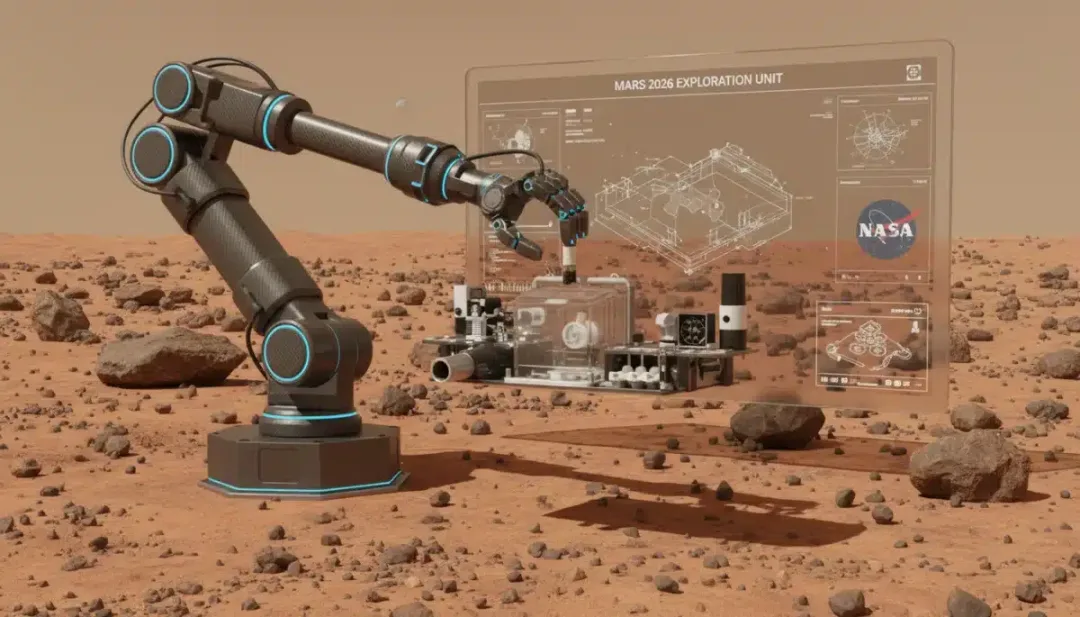
Robotics will play an increasingly critical role in the NASA 2026 Missions Technology framework, particularly for tasks that are too dangerous, repetitive, or precise for humans.
These systems extend human capabilities across vast distances.
From complex geological sampling on other planets to the construction of lunar infrastructure, autonomous robots will be indispensable.
The development of advanced AI for these systems will also have profound implications for automation on Earth.
Autonomous Rovers: Enhanced navigation and scientific discovery capabilities.
Robotic Construction: Automated assembly of habitats and infrastructure on the Moon and Mars.
AI for Mission Control: Real-time decision support and anomaly detection.
Impact on U.S. Technological Advancement
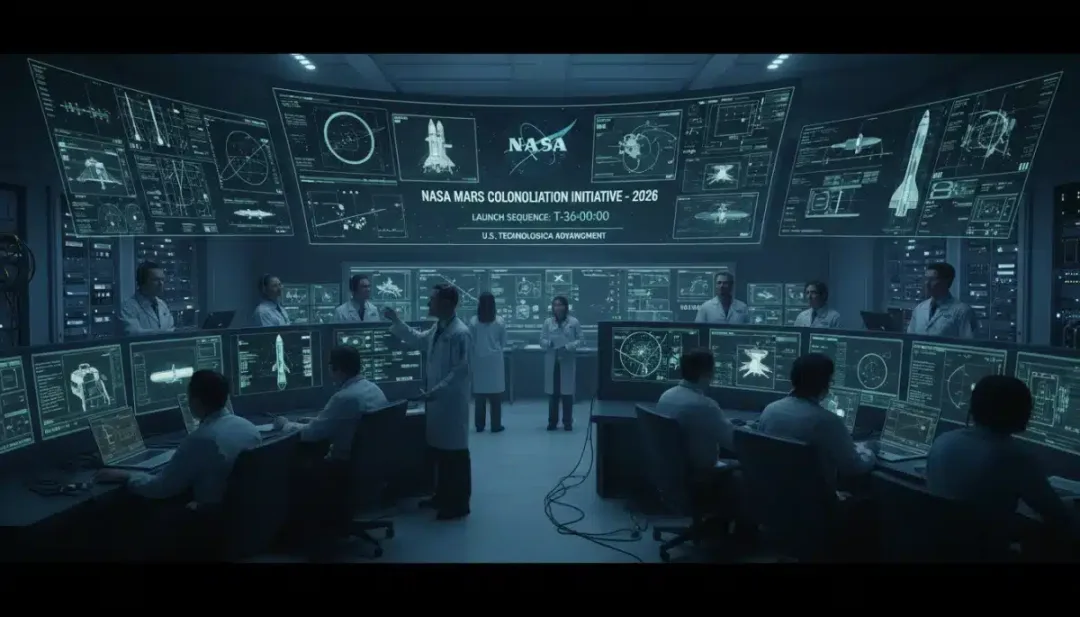
The ripple effect of NASA’s 2026 missions on U.S. technological advancement is expected to be profound, stimulating innovation across multiple industries.
These benefits extend far beyond the direct applications in space, influencing everyday life and economic competitiveness.
The intense research and development required for space missions often lead to unexpected spin-off technologies that find commercial applications. These range from medical devices to advanced materials and environmental monitoring systems.
Furthermore, the demand for highly skilled workers in fields like aerospace engineering, computer science, and astrophysics drives educational initiatives and fosters a new generation of innovators, strengthening the U.S. STEM workforce.
Economic Stimulus and Job Creation
Beyond technological innovation, the NASA 2026 Missions Technology initiatives are significant drivers of economic growth and job creation within the United States.
Large-scale government projects like these require extensive supply chains and a diverse workforce.
Billions of dollars are invested in research, development, manufacturing, and operations, directly supporting thousands of jobs across various states.
This investment stimulates local economies and supports high-tech industries.
Small and medium-sized businesses often play a crucial role in providing specialized components and services, fostering a robust ecosystem of innovation.
The long-term economic benefits include new industries and market opportunities stemming from space-related technologies.
International Collaboration and Global Leadership
The NASA 2026 Missions Technology framework also emphasizes international collaboration, solidifying U.S. leadership in global space endeavors.
Partnerships with other nations pool resources, share expertise, and distribute the risks and costs of ambitious projects.
Collaborative missions foster diplomatic ties and promote peaceful cooperation in the exploration of space.
The United States frequently leads these efforts, setting standards and guiding the direction of future international space policy.
These partnerships are not just about sharing the load; they also facilitate the exchange of scientific knowledge and technological advancements, benefiting all participating nations while maintaining the U.S. at the forefront of innovation.
Challenges and Overcoming Hurdles
Despite the ambitious goals and significant progress, the NASA 2026 Missions Technology face numerous challenges that require continuous innovation and problem-solving.
These hurdles range from technical complexities to budgetary constraints and political considerations.
Developing reliable systems for long-duration missions in harsh space environments presents immense engineering challenges.
Radiation shielding, life support systems, and maintaining equipment in extreme temperatures are constant areas of focus.
Securing consistent funding and public support is also crucial for sustaining these long-term projects.
NASA must continuously demonstrate the value and feasibility of its missions to maintain political will and budgetary allocations.
Mitigating Space Environment Risks
The unforgiving nature of space demands innovative solutions to protect both human and robotic assets.
Radiation, micrometeoroids, and extreme temperature fluctuations pose significant threats to mission success and astronaut safety, directly impacting NASA 2026 Missions Technology development.
Advanced materials research is critical for developing more resilient spacecraft and habitat designs capable of withstanding these conditions.
This includes self-healing materials and enhanced shielding technologies that can adapt to changing threats.
Radiation Shielding: Development of advanced materials and active shielding techniques to protect crew and equipment.
Micrometeoroid Protection: Innovative designs for spacecraft and habitat exteriors to resist impacts.
Thermal Control Systems: Highly efficient systems to manage extreme temperature variances.
Budgetary and Political Landscape
The financial and political backing for NASA 2026 Missions Technology is a continuous challenge, requiring consistent advocacy and clear communication of mission benefits.
Long-term projects depend heavily on stable funding cycles and bipartisan support.
Economic fluctuations and shifting political priorities can impact NASA’s budget, potentially delaying or altering mission objectives. Effective strategic planning and strong public engagement are vital to navigating this landscape.
Stable Funding: Advocating for consistent budget allocations to ensure project continuity.
Public Engagement: Communicating the societal benefits of space exploration to garner widespread support.
Bipartisan Support: Building consensus across political divides for long-term strategic goals.
Future Outlook and Long-Term Vision
The NASA 2026 Missions Technology are integral to a broader, long-term vision for humanity’s presence in space, extending far beyond the current decade.
These missions are laying the groundwork for sustainable outposts and eventual human travel to Mars and beyond.
The knowledge gained and technologies developed will serve as foundational elements for future generations of explorers and scientists.
This includes advancements in in-situ resource utilization, allowing astronauts to live off the land on other celestial bodies.
Ultimately, these efforts aim to establish a permanent human presence beyond Earth, fostering a multi-planetary civilization.
This audacious goal begins with the methodical, innovative steps taken in missions like those planned for 2026.
Public Engagement and STEM Education
A crucial aspect of the NASA 2026 Missions Technology impact is its profound influence on public engagement and STEM education.
These ambitious projects inspire millions, particularly younger generations, to pursue careers in science, technology, engineering, and mathematics.
NASA actively promotes educational initiatives, outreach programs, and citizen science projects that allow the public to participate in and learn from space exploration.
This fosters a scientifically literate society and cultivates future innovators.
The excitement generated by new discoveries and the challenges of space travel serves as a powerful motivator, ensuring a continuous pipeline of talent for U.S. technological advancement and maintaining the nation’s competitive edge in critical fields.
Key Aspect | Brief Description |
|---|---|
Lunar Presence | Establishing sustainable human presence on the Moon as a gateway to Mars. |
Propulsion Breakthroughs | Developing advanced systems like nuclear thermal propulsion for faster travel. |
Robotics & AI | Enhancing autonomous systems for exploration, construction, and mission support. |
Economic Impact | Stimulating job growth and fostering spin-off technologies across U.S. industries. |
Frequently Asked Questions About NASA’s 2026 Missions
What are the primary goals of NASA’s 2026 missions?▼
The primary goals include establishing a sustained human presence on the Moon, advancing propulsion systems for deep-space travel, and enhancing robotic exploration capabilities. These missions also aim to drive U.S. technological advancement and foster international collaboration in space.
How will these missions impact U.S. technological advancement?▼
NASA’s 2026 missions will spur innovation in areas like advanced materials, robotics, AI, and propulsion. This drives economic growth, creates high-tech jobs, and leads to spin-off technologies with terrestrial applications, strengthening the U.S. leadership.
What role do international partnerships play in these missions?▼
International partnerships are crucial for sharing resources, expertise, and mitigating risks associated with complex space endeavors. These collaborations foster diplomatic ties and ensure that U.S. technological advancement remains at the forefront of global space exploration.
What are the main technological challenges for the 2026 missions?▼
Key challenges include developing reliable radiation shielding, advanced life support systems for long durations, and robust robotic systems for extreme environments. Overcoming these hurdles is essential for the success of NASA 2026 Missions Technology.
How do these missions contribute to STEM education and public engagement?▼
The missions inspire interest in science and technology, encouraging younger generations to pursue STEM careers. NASA’s outreach programs and public engagement initiatives leverage the excitement of space exploration to foster a scientifically literate populace and future innovators.
Impact and Implications
The NASA 2026 Missions Technology represents more than just a series of launches; they are a strategic investment in the future of the United States.
The technological advancements driven by these initiatives will resonate across industries, fostering innovation and economic competitiveness for decades to come.
As these missions unfold, observers should closely monitor the development of key technologies and their terrestrial applications, as well as the evolving landscape of international collaboration.
To stay informed on how these structural advancements integrate into long-term infrastructure, including the latest developments regarding upcoming lunar lander contracts and sustained lunar surface operations, you can read the official announcement on NASA sharing its latest moon base mission progress.
The path forged by these endeavors will undeniably shape America’s role as a leader in science and technology on the global stage.