Public Safety: New National Standards for Emergency Response Protocols Implemented by March 2026
Advertisements
New federal public safety grants starting mid-2026 are rolling out from the U.S. Department of Justice to support local law enforcement and community programs.
This direct, objective overview breaks down the major funding streams—ranging from officer hiring and mental health initiatives to school violence prevention—and outlines the essential application deadlines local agencies and organizations need to track.
Understanding the New Federal Public Safety Grants Landscape
The federal government is set to roll out significant new funding opportunities for law enforcement and community programs beginning mid-2026.
These initiatives are part of a broader strategy to enhance public safety nationwide, addressing both traditional crime prevention and innovative community-based solutions.
The grants aim to create a more integrated approach to safety, recognizing the diverse needs of different localities.
Officials have indicated that these federal public safety grants will prioritize programs demonstrating clear objectives, measurable outcomes, and a commitment to collaborative efforts.
The emphasis is on sustainable solutions that not only respond to immediate threats but also build long-term capacity within communities.
This shift reflects a growing understanding that public safety is a multifaceted issue requiring comprehensive intervention.
The announcement of these grants has generated considerable interest among state and local agencies, as well as various non-profit organizations.
Many are already beginning to assess how these new funding streams can support their existing projects or inspire the development of new ones.
The goal is to maximize the impact of these federal public safety grants to achieve tangible improvements in public well-being.
Key Areas of Focus for New Funding
The upcoming federal public safety grants will target several critical areas identified as essential for modern public safety.
These include enhanced training for law enforcement, investment in new technologies, and a significant boost to community violence intervention programs. The breadth of these focus areas underscores a holistic approach to safety.
Law Enforcement Training: Funding for de-escalation tactics, crisis intervention, and community policing models.
Technological Advancements: Support for data analytics tools, body cameras, and other equipment to improve operational efficiency and transparency.
Community Violence Prevention: Grants for programs addressing root causes of violence, youth mentorship, and re-entry services.
Each of these areas is designed to complement the others, creating a cohesive framework for improving public safety outcomes.
The federal public safety grants are not merely about increasing budgets but about strategically investing in proven methods and innovative solutions.
This targeted approach seeks to ensure that resources are deployed where they can have the most profound and lasting effect.
Eligibility and Application Process for Federal Public Safety Grants
Navigating the eligibility criteria and application process for these new federal public safety grants will be a crucial step for prospective recipients.
The federal agencies administering these funds are expected to release detailed guidelines in the coming months, outlining specific requirements and necessary documentation. Early preparation will be key for successful applications.
Typically, federal grants require applicants to demonstrate a clear need, a well-defined project plan, and the capacity to effectively manage the funds.
Organizations should begin reviewing their current programs and identifying areas that align with the stated priorities of these federal public safety grants.
This proactive approach can significantly streamline the application process once it officially opens.
It is anticipated that workshops and informational sessions will be held to assist potential applicants in understanding the nuances of the grant requirements.
These resources will be invaluable for ensuring that applications are complete, competitive, and accurately reflect the proposed initiatives.
Staying informed about these support opportunities will be vital for any entity seeking to secure these federal public safety grants.
Who Can Apply for Funding
A broad range of entities will likely be eligible for these federal public safety grants, reflecting the diverse nature of public safety work.
This includes state, local, and tribal law enforcement agencies, as well as non-profit organizations and community groups. The goal is to empower a wide array of stakeholders in their efforts to improve safety.
State and Local Governments: For departments of justice, public safety, and human services.
Law Enforcement Agencies: Police departments, sheriff’s offices, and correctional facilities.
Non-Profit Organizations: Community-based organizations focused on crime prevention, victim support, and youth development.
The inclusion of various types of organizations underscores the federal government’s commitment to a collaborative approach to public safety.
These federal public safety grants are designed to foster partnerships between traditional law enforcement and community-led initiatives.
This integrated strategy is expected to yield more effective and sustainable results in building safer communities.
Impact on Law Enforcement Agencies and Community Programs
The introduction of these new federal public safety grants is poised to have a transformative impact on both law enforcement agencies and community-based programs.
For law enforcement, the funding can facilitate crucial upgrades in equipment, technology, and training, leading to more effective and community-oriented policing. This support extends beyond basic operational costs, allowing for strategic investments.
Community programs, on the other hand, will see enhanced capacity to deliver vital services that address the root causes of crime and foster community resilience.
These federal public safety grants can enable the expansion of mental health services, youth engagement programs, and violence interruption initiatives, which are often underfunded.
The aim is to create a stronger social fabric that supports safety from within.
Ultimately, the successful implementation of these federal public safety grants has the potential to reshape the public safety landscape, moving towards a more proactive, preventative, and community-centric model.
The long-term benefits are expected to include reduced crime rates, improved community-police relations, and a greater sense of security for residents. This is an investment in the overall health and stability of American communities.
Expected Outcomes for Public Safety
The federal public safety grants are designed with specific outcomes in mind, aiming to produce measurable improvements across various indicators.
These outcomes range from a reduction in violent crime to increased public trust in law enforcement, reflecting a comprehensive vision for public safety. The focus is on tangible results that benefit all members of society.
Reduced Crime Rates: Through targeted interventions and improved law enforcement capabilities.
Enhanced Community Trust: Via community policing initiatives and transparent practices.
Improved Mental Health Support: For both individuals in crisis and first responders.
These expected outcomes highlight the multifaceted objectives of the federal public safety grants.
They recognize that true public safety extends beyond arrests and includes fostering a supportive and healthy community environment.
The success of these grants will be measured not just in numbers, but in the overall improvement of community well-being and security.
Strategic Planning for Grant Utilization
Effective strategic planning will be essential for maximizing the benefits of the new federal public safety grants.
Agencies and organizations should begin to develop comprehensive plans that outline how they intend to use the funds, what goals they aim to achieve, and how they will measure success.
A well-thought-out strategy will increase the likelihood of securing and effectively utilizing these resources.
This planning phase should involve collaboration between various stakeholders, including law enforcement, community leaders, and local government officials.
Such collaborative efforts ensure that the proposed projects align with community needs and priorities, making the application for federal public safety grants more compelling.
It also fosters a sense of shared ownership and responsibility for public safety outcomes.
Furthermore, organizations should consider the long-term sustainability of the programs funded by these grants.
While the federal public safety grants provide initial capital, planning for continued funding and operational support beyond the grant period is crucial.
This forward-thinking approach ensures that successful initiatives can continue to benefit communities for years to come.
Best Practices for Grant Applications
To stand out in a competitive application process, organizations should adhere to several best practices when applying for federal public safety grants.
These include thorough research, clear articulation of project goals, and robust data to support the proposed initiatives. A strong application is one that clearly demonstrates both need and capability.
Thorough Needs Assessment: Clearly identify the problem your project aims to solve with supporting data.
Defined Project Goals: Set specific, measurable, achievable, relevant, and time-bound (SMART) objectives.
Budgetary Transparency: Provide a detailed and realistic budget that aligns with project activities.
Adhering to these best practices will not only improve the chances of receiving federal public safety grants but also lay the groundwork for successful project implementation.
A well-prepared application reflects an organization’s commitment and capacity to make a meaningful impact on public safety.
Anticipated Challenges and Mitigation Strategies
While the new federal public safety grants offer significant opportunities, recipients should also prepare for potential challenges during implementation.
These can range from administrative hurdles and reporting requirements to ensuring community buy-in and managing diverse stakeholder expectations. Proactive planning for these challenges is essential for smooth execution.
One common challenge involves the rigorous reporting and compliance standards associated with federal funding.
Organizations must have robust internal systems in place to track expenditures, demonstrate progress, and adhere to all regulatory requirements.
Failure to do so can jeopardize future funding and lead to audit issues related to federal public safety grants.
Another potential hurdle lies in securing and maintaining community engagement, especially for programs that require active participation and trust.
Developing clear communication strategies and fostering strong relationships with community leaders can help mitigate these issues. The success of these federal public safety grants often hinges on effective community collaboration.
Ensuring Program Sustainability
A critical aspect of utilizing federal public safety grants effectively is planning for program sustainability beyond the initial funding period.
Many successful initiatives face cessation once grant funds are depleted, undermining the long-term impact. Developing strategies for continued financial support and operational capacity is vital.
Diversified Funding Streams: Explore additional grants, local funding, and private partnerships.
Community Ownership: Empower local residents and organizations to take ownership of programs.
Demonstrate Impact: Collect strong data to showcase success and attract future investment.
By focusing on sustainability from the outset, organizations can ensure that the positive changes brought about by these federal public safety grants continue to benefit communities indefinitely.
This forward-thinking approach transforms temporary funding into lasting solutions for public safety.
Monitoring and Evaluation of Grant Programs
The effective monitoring and evaluation of programs funded by federal public safety grants will be paramount to demonstrating their impact and ensuring accountability.
Federal agencies will likely require regular progress reports and outcome assessments to track how funds are being utilized and the extent to which program goals are being achieved. This rigorous oversight ensures transparency and effectiveness.

Implementing robust data collection and analysis systems from the outset will be crucial for grant recipients.
This includes tracking key performance indicators (KPIs) relevant to public safety, such as crime rates, community engagement levels, and participant outcomes.
Accurate data will not only satisfy reporting requirements but also provide valuable insights for program improvement and future planning related to federal public safety grants.
Furthermore, independent evaluations may be commissioned to provide an unbiased assessment of program effectiveness and identify best practices.
These evaluations can inform future policy decisions and help refine the allocation of federal public safety grants. A commitment to continuous learning and adaptation based on evidence is central to the success of these initiatives.
Measuring Success and Accountability
Measuring the success of programs funded by federal public safety grants involves more than just tracking expenditures; it requires a focus on tangible outcomes and impacts.
Establishing clear metrics for success at the beginning of a project is essential for demonstrating accountability and value. These metrics should align with the overarching goals of the federal public safety grants.
Outcome-Based Metrics: Focus on changes in crime rates, community perceptions, or service utilization.
Process Metrics: Track activities like training sessions conducted or number of community meetings held.
Cost-Effectiveness Analysis: Evaluate the return on investment for the funds utilized.
By prioritizing comprehensive measurement and evaluation, organizations can effectively communicate the impact of their work and justify the investment of federal public safety grants.
This commitment to accountability strengthens public trust and supports the continued funding of vital public safety initiatives.
The Role of Collaboration in Maximizing Grant Impact
Collaboration is a cornerstone for maximizing the impact of the new federal public safety grants.
Successful programs often arise from strong partnerships between law enforcement, local government, community organizations, and residents.
These partnerships ensure that initiatives are well-informed, widely supported, and tailored to the unique needs of each community.
Building effective collaborative frameworks requires open communication, shared goals, and a mutual understanding of each partner’s roles and responsibilities.
For federal public safety grants, this means police departments working alongside mental health providers, or city councils partnering with youth mentorship programs.
Such synergy can lead to more innovative and comprehensive solutions to complex public safety issues.
Moreover, collaborative efforts can enhance the sustainability of programs by pooling resources, sharing expertise, and fostering a sense of collective ownership.
When diverse stakeholders are invested in a project, it is more likely to thrive and continue to deliver benefits long after the initial federal public safety grants have been expended. This integrated approach is key to lasting positive change.
Fostering Community Partnerships
Fostering robust community partnerships is vital for the effective utilization of federal public safety grants.
These partnerships ensure that programs are responsive to local needs and that community members are actively involved in shaping public safety strategies.
Engagement builds trust and increases the likelihood of long-term success for initiatives funded by federal public safety grants.
Community Advisory Boards: Establish formal groups for resident input and feedback.
Joint Training Initiatives: Conduct training sessions that include both law enforcement and community members.
Shared Resource Development: Collaborate on developing materials and programs that address common concerns.
By actively engaging the community, organizations can ensure that the federal public safety grants translate into programs that are not only effective but also deeply embedded in the fabric of local life.
This collaborative spirit transforms public safety from a top-down mandate into a shared community endeavor.
Future Outlook for Federal Public Safety Funding
The landscape of federal public safety funding is dynamic, and the introduction of these new federal public safety grants starting mid-2026 marks a significant evolution.
It signals a continued commitment from the federal government to invest in comprehensive approaches to safety, balancing traditional enforcement with community-centric solutions.
This forward-looking perspective is crucial for all stakeholders.
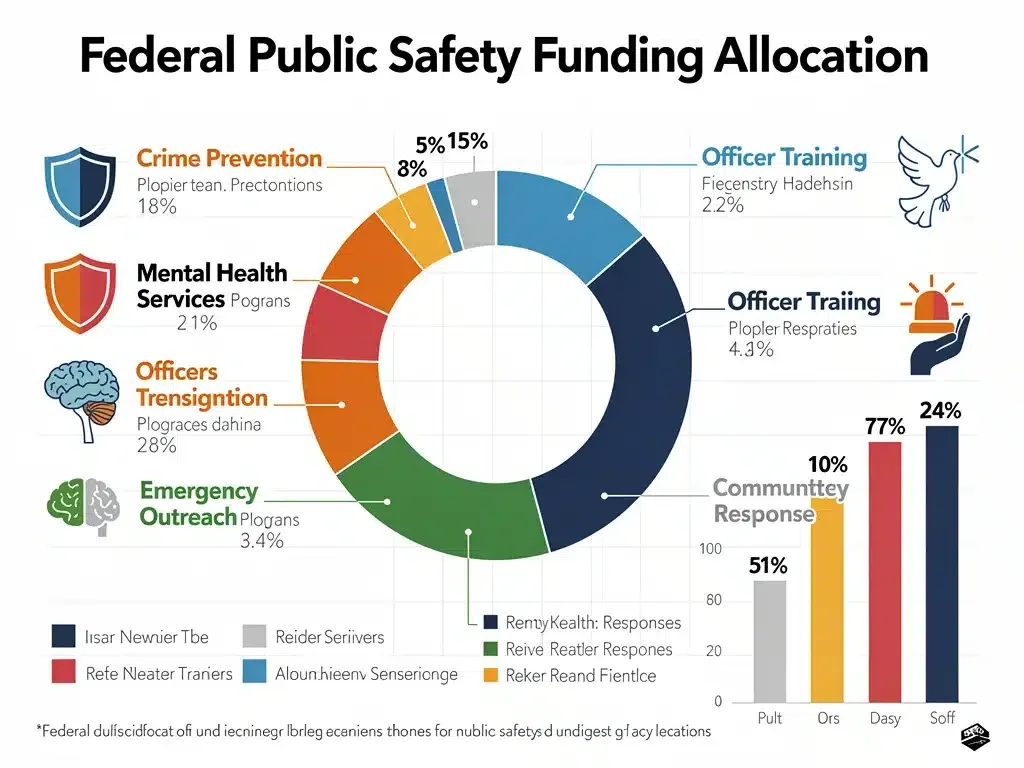
As these federal public safety grants become available, it is anticipated that there will be ongoing adjustments and refinements based on initial outcomes and emerging needs.
Policy makers will closely monitor the effectiveness of funded programs, using data and feedback to inform future funding priorities and guidelines. This adaptive approach ensures that federal investments remain relevant and impactful.
Therefore, staying informed about future legislative changes, funding cycles, and policy shifts will be essential for agencies and organizations relying on these federal public safety grants.
The commitment to public safety is a continuous process, and federal funding will likely evolve to meet new challenges and opportunities. Proactive engagement with these developments will be key to sustained success.
Long-Term Vision for Public Safety
The long-term vision for public safety, supported by these federal public safety grants, emphasizes a future where communities are not only safe from crime but also thrive through robust social support systems.
This vision moves beyond reactive measures to proactive prevention and holistic well-being. It represents a fundamental shift in how safety is conceptualized and achieved.
Integrated Systems: Connecting law enforcement, mental health, education, and social services.
Data-Driven Decisions: Utilizing analytics to identify trends and allocate resources effectively.
Community Resilience: Building strong, self-sufficient communities capable of addressing their own safety needs.
This long-term vision, powered by strategic federal public safety grants, aims to create a society where every individual feels secure and has access to the resources needed to live a safe and fulfilling life.
It is an ambitious goal, but one that is increasingly within reach through concerted effort and smart investment.
Key Aspect | Brief Description |
|---|---|
Grant Launch | Federal public safety grants begin mid-2026. |
Funding Focus | Law enforcement enrichment and community program development. |
Eligibility | State, local, tribal agencies, and non-profit organizations. |
Key Benefit | Enhanced public safety through integrated, community-centric approaches. |
Frequently Asked Questions About Federal Public Safety Grants
When do these new federal public safety grants become available?▼
The new federal public safety grants for law enforcement and community programs are officially slated to begin in mid-2026. Agencies and organizations should monitor official government websites for precise dates and detailed application windows as they approach.
What types of programs will these grants support?▼
These grants will support a wide range of initiatives, including law enforcement training, technology upgrades, and various community-based violence prevention and intervention programs. The focus is on holistic approaches to enhancing public safety outcomes nationwide.
Who is eligible to apply for these federal public safety grants?▼
Eligibility extends to state, local, and tribal law enforcement agencies, as well as non-profit organizations and community groups. Detailed eligibility criteria will be released by the administering federal agencies closer to the grant launch date.
How can organizations prepare for the application process?▼
Organizations should begin by conducting a thorough needs assessment, defining clear project goals, and developing a detailed budget. Staying informed through official government channels and attending informational sessions will also be beneficial for preparation.
What is the expected long-term impact of these grants?▼
The grants are expected to foster safer communities, improve relations between law enforcement and residents, and support sustainable, community-driven public safety solutions. The goal is a more integrated and proactive approach to safety across the United States.
Looking Ahead: The Future of Public Safety Funding
The introduction of these federal public safety grants represents a pivotal moment in how the nation approaches the complex challenges of public safety.
This new wave of funding is designed not just to react to existing issues but to proactively build safer, more resilient communities through strategic investment. Understanding the nuances of these grants will be crucial for all stakeholders.
As we move towards mid-2026, the focus will shift from planning to implementation, with a keen eye on how these resources translate into tangible improvements on the ground.
The success of these federal public safety grants will undoubtedly shape future policy decisions and funding allocations.
Achieving these long-term goals relies heavily on the dedication and training of law enforcement personnel who execute these programs locally.
To learn more about how state agencies recruit, train, and support the officers leading these community-focused initiatives, you can explore the California Department of Justice Public Safety Leadership and Employment page.
Staying informed and engaged will be key to leveraging these opportunities effectively.
The long-term implications of these federal public safety grants are profound, promising to foster a more collaborative and comprehensive public safety ecosystem across the United States.
This is an ongoing development that demands continuous attention and strategic foresight from all involved parties.